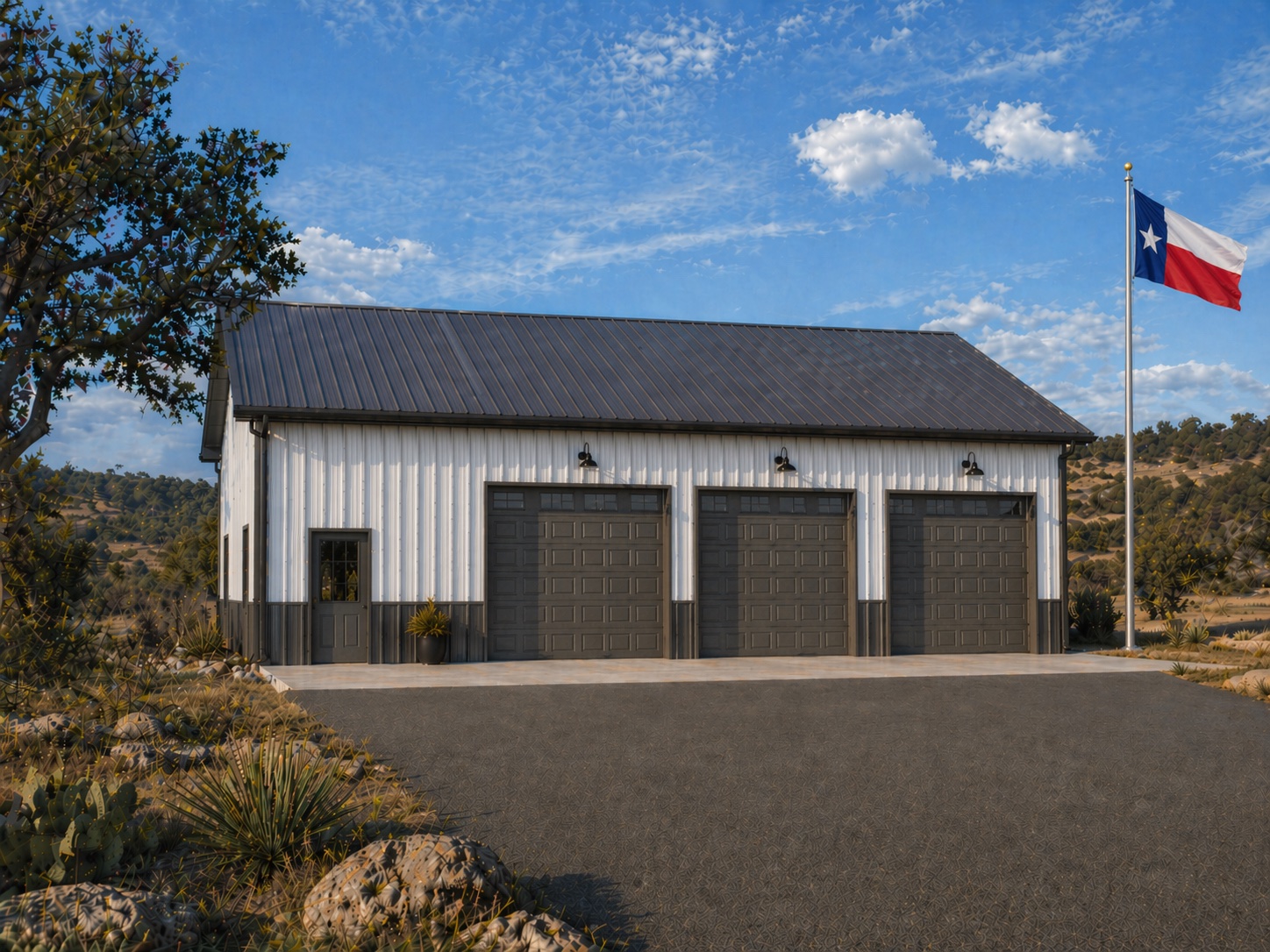
Texas is one of the most active states in the country for post-frame and pole barn construction, and for good reason.
Property owners use these buildings for everything from equipment storage and workshops to garages, horse barns, hobby spaces, and barndominiums. But if you have started collecting numbers, you have probably seen a wide range of prices already.
That is normal.
Pole barn costs in Texas can vary a lot based on region, wind requirements, slab needs, finish level, site conditions, and how complete each builder's quote really is.
Quick answer
There is no single statewide price that fits every Texas pole barn project.
A basic shell in a simple rural setting is one thing. A taller, insulated, finished building with upgraded doors, slab work, and more demanding structural requirements is something else entirely.
The smartest way to approach pricing in Texas is to understand the major cost drivers first, then compare local builders based on the actual scope included.
What affects pole barn cost in Texas most
1. Region of the state
Texas is not one-size-fits-all.
A project in one part of the state may have different labor conditions, delivery costs, weather exposure, and local building expectations than a project in another. Coastal and higher-wind areas can create different design requirements than more sheltered inland locations.
That means a statewide average can only go so far.
2. Wind and structural requirements
In Texas, structural design can be a major pricing factor.
Depending on the county and exact location, wind exposure requirements may drive different engineering decisions, framing details, and material needs. Buyers should be careful not to compare a lightly specified quote against a more robust one without understanding the difference.
3. Slab, site prep, and drainage
A Texas building site that looks easy at first glance may still need meaningful prep.
Grading, fill, access, base prep, drainage planning, and slab work can all move the budget. This becomes even more important if the building is intended for regular vehicle use, workshop use, or finished occupancy.
4. Intended use of the building
A storage barn, a vehicle garage, a workshop, and a barndominium shell are not remotely the same price category.
That sounds obvious, but many buyers still start by comparing quotes as if all enclosed metal-sided buildings are basically the same. In practice, the intended use changes the slab, doors, insulation, electrical, and finish level dramatically.
5. Door and opening upgrades
Texas owners often want buildings that are highly usable for trucks, trailers, equipment, RVs, or multipurpose shop use.
That usually means larger overhead doors, taller sidewalls, upgraded entry doors, or extra openings, all of which add cost.
6. Finish level and comfort expectations
A shell-only building is one budget. A building you actually want to work in during heat, cold, or year-round use is another.
If you plan on using the building as a real shop, hobby space, or flex structure, insulation, lighting, ventilation, and interior finish decisions matter early.
What many Texas buyers underestimate
Site-specific details
Buyers often focus on the structure and forget the ground it sits on.
Even if a quote sounds strong, ask whether it includes:
- Grading
- Pad prep
- Slab prep
- Drainage work
- Driveway / access assumptions
- Utility considerations
Scope differences between builders
Texas quotes can look very different simply because one builder is pricing more of the total project.
One company may include slab coordination, doors, trim, and more complete scope assumptions. Another may be pricing a much simpler shell.
That is why headline price alone can mislead you.
How to compare Texas pole barn quotes
Ask every builder:
- What exactly is included in this price?
- Is engineering included?
- Is slab work included?
- Is site prep included?
- Are overhead doors and windows included?
- Is this shell-only pricing or a more complete build?
- What wind assumptions is this quote based on?
- What common add-ons do Texas buyers usually add later?
When you standardize those questions, the bids become much easier to compare.
Common mistakes Texas buyers make
Using national averages as a budget
National pricing content can be useful for orientation, but Texas projects should still be priced locally.
Not accounting for real use
If you know the building needs to function as a real garage, shop, or finished space, do not budget like it is simple storage.
Ignoring structural assumptions
Different structural assumptions can make two "similar" quotes not similar at all.
Shopping by lowest bid only
The cheaper number is not always the better project.
Final takeaway
Pole barn costs in Texas vary because Texas projects vary.
The right way to budget is to define the actual use of the building, understand the local conditions, and compare builders based on scope instead of just price.
Frequently Asked Questions
Why do Texas pole barn quotes vary so much?▾
Texas is a large state with major differences in wind exposure, labor markets, and freight costs from region to region. On top of that, builders don't all price the same scope — one quote may include engineering, slab, and site prep while another quotes only the shell. Always compare what's included, not just the number.
Do wind requirements really affect Texas pole barn prices?▾
Yes. Depending on the county and proximity to the coast, wind exposure requirements can drive meaningfully different engineering and framing decisions. A more robust structural package costs more, but comparing it to a lightly-specified quote without understanding the difference is misleading.
Should I budget for slab and site prep separately in Texas?▾
Ask every builder whether slab, grading, pad prep, and drainage are included in their quote. Some Texas builders coordinate the full scope; others price only the structure and leave site work to the owner. Either can work — as long as you know which you're getting.
Looking for Texas builders?
Compare pole barn and post-frame builders in Texas on Post Frame Network and start narrowing your list by project type, location, and fit.