
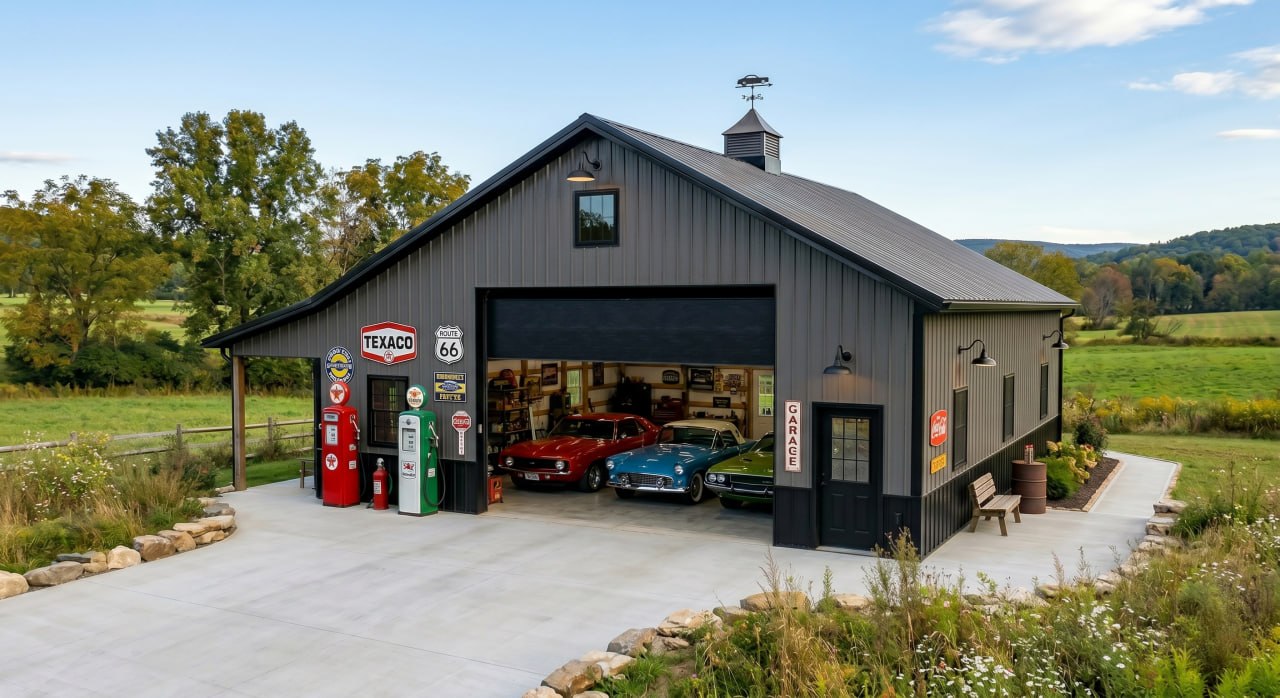
If you've started pricing a pole barn, you've probably already noticed something frustrating: the numbers can be all over the place.
One builder gives you a low shell price. Another includes concrete. Another assumes no insulation, no electrical, and no doors beyond the basics. On paper, the buildings may look similar. In reality, they can be completely different projects.
That is why a simple "price per square foot" answer usually does not tell the full story.
This guide breaks down what actually drives pole barn cost in 2026, where buyers tend to get surprised, and how to compare quotes without getting lost in misleading numbers.
Quick answer
Pole barn costs vary widely based on size, location, finish level, foundation approach, doors, insulation, interior build-out, and site work.
As a broad rule:
- A basic shell can be dramatically less than a fully finished garage or shop
- A workshop with concrete, insulation, and electrical can cost far more than buyers expect from online averages
- A barndominium or highly finished post-frame space is a completely different price category than a storage barn
The important thing is not chasing the cheapest number. It is understanding exactly what each quote includes.
What affects pole barn cost the most
1. Size and dimensions
Larger buildings often become more efficient on a per-square-foot basis, but total cost still rises fast. A simple 24x30 storage building is a very different project than a 40x60 insulated shop with oversized doors and upgraded materials.
Span, wall height, and roof design matter too. Clear spans, taller sidewalls, and more complex rooflines all push price upward.
2. Shell only vs. finished building
This is where many buyers get tripped up.
A shell quote may include only the structural frame, metal siding, roof system, and basic openings. A more complete quote may include:
- Concrete slab
- Overhead doors
- Windows
- Insulation
- Electrical rough-in
- Liner panels or interior finishes
- Gutters and drainage work
Those are not small add-ons. They can change the entire budget.
3. Site prep and dirt work
A perfectly flat, easy-access lot is not the same as a sloped or soft site that needs grading, fill, drainage correction, or tree clearing.
Before comparing builders, make sure you know whether the quote includes:
- Grading
- Excavation
- Stone base
- Driveway access
- Drainage work
- Slab prep
Site work is one of the most common reasons a "cheap" quote stops looking cheap.
4. Concrete and foundation details
Not every building quote includes the same slab thickness, reinforcement, edge detail, or prep work.
For a simple storage building, concrete may be minimal or excluded altogether. For a shop with lifts, equipment, vehicles, or heavier loads, slab specs matter a lot more.
If one quote includes a robust slab and another assumes the customer will handle it separately, those bids are not comparable.
5. Doors, windows, and access points
A couple of basic openings are one thing. Multiple overhead doors, taller RV doors, upgraded entry doors, more windows, and custom placements all add cost.
These are also items buyers care about a lot in daily use, which means they often get upgraded after the initial estimate.
6. Insulation and interior finish level
A cold-storage barn is not priced like a climate-controlled garage, workshop, or hobby space.
The jump from shell to insulated usable space can be major once you add:
- Wall and roof insulation
- Vapor control details
- Interior liner panels or drywall
- Electrical and lighting
- Heating and cooling
If you plan to actually spend time in the building, budget for comfort from the start.
7. Region and labor market
Local labor rates, freight, weather exposure, wind requirements, snow loads, and county-level requirements can all affect pricing.
That means a building in Texas may be priced differently than a similar one in Ohio or Pennsylvania, even at the same size.
This is one reason state-specific cost content matters and why local quotes are more useful than national averages. Start by browsing pole barn builders in your state to get numbers grounded in your local market.
Common pricing buckets buyers should understand
Basic shell
Usually best for storage-focused buyers who want the structure first and may handle some of the rest later.
Often includes:
- Posts and framing
- Trusses
- Metal roof and siding
- Basic openings
Often does not include everything needed for a finished usable shop.
Garage or workshop build
This is where budgets start to move meaningfully higher because the building is expected to function as a real workspace, vehicle space, or hobby area.
Possible added costs include:
- Slab
- Larger doors
- Insulation
- Electrical
- Lighting
- Better ventilation
- Upgraded wall height
High-finish post-frame build or barndominium
This is not just a barn price anymore. This is a full building project with much more complexity, more trades, and more finish decisions.
Trying to compare this to a shell-only pole barn quote will only create confusion.
Why pole barn quotes vary so much
Because builders do not all price the same scope.
One contractor may price exactly what you asked for. Another may simplify parts of the project. Another may assume allowances or leave major items out entirely.
That is why the lowest number is not always the best number. Sometimes it is just the least complete number.
What to ask before comparing quotes
Ask every builder these questions:
- What exactly is included in this price?
- Is concrete included?
- Is site prep included?
- Are permits included or handled separately?
- What insulation, if any, is assumed?
- Are overhead doors and windows included?
- Is this price for shell only or a more complete build?
- What is excluded that buyers often assume is included?
- How do you handle change orders?
If you get those answers in writing, quote comparison becomes much easier.
Common mistakes buyers make
Comparing by price only
A lower quote may simply leave out major costs.
Using national averages as a real budget
Online averages can help set expectations, but they do not replace local builder quotes.
Deciding finish level too late
If you know you want insulation, electrical, interior finish, or a heavier-duty slab, do not pretend you are pricing a basic shell.
Forgetting site conditions
Access, drainage, slope, and prep matter more than many first-time buyers realize.
Final takeaway
The right question is not just "How much does a pole barn cost?"
The better question is: "What does my actual building cost once I include the features, site work, and finish level I really need?"
That is how you avoid misleading estimates and compare builders fairly.
Frequently Asked Questions
Why do pole barn quotes vary so much between builders?▾
Because builders don't all price the same scope. One may include concrete, site prep, and permits. Another may quote only the shell. Always get a written breakdown of what's included before comparing numbers.
What's the difference between a pole barn shell and a finished building?▾
A shell may include framing, trusses, roof and wall cladding, and defined openings. A finished build can add site work, slab, insulation, electrical, doors, windows, HVAC, plumbing, and interior finishes. The price difference depends on the written scope; do not apply a universal percentage.
Is using a national pole barn cost average a good way to budget?▾
National averages can set rough expectations but they're not a real budget. Labor rates, permit rules, snow and wind loads, and material freight all vary by region. Get 2–3 local quotes to compare against the average, not instead of it.
Ready to get real numbers?
Browse pole barn and post-frame builders on Post Frame Network and compare companies by state, specialties, reviews, and project fit. Local quotes beat national averages every time.