
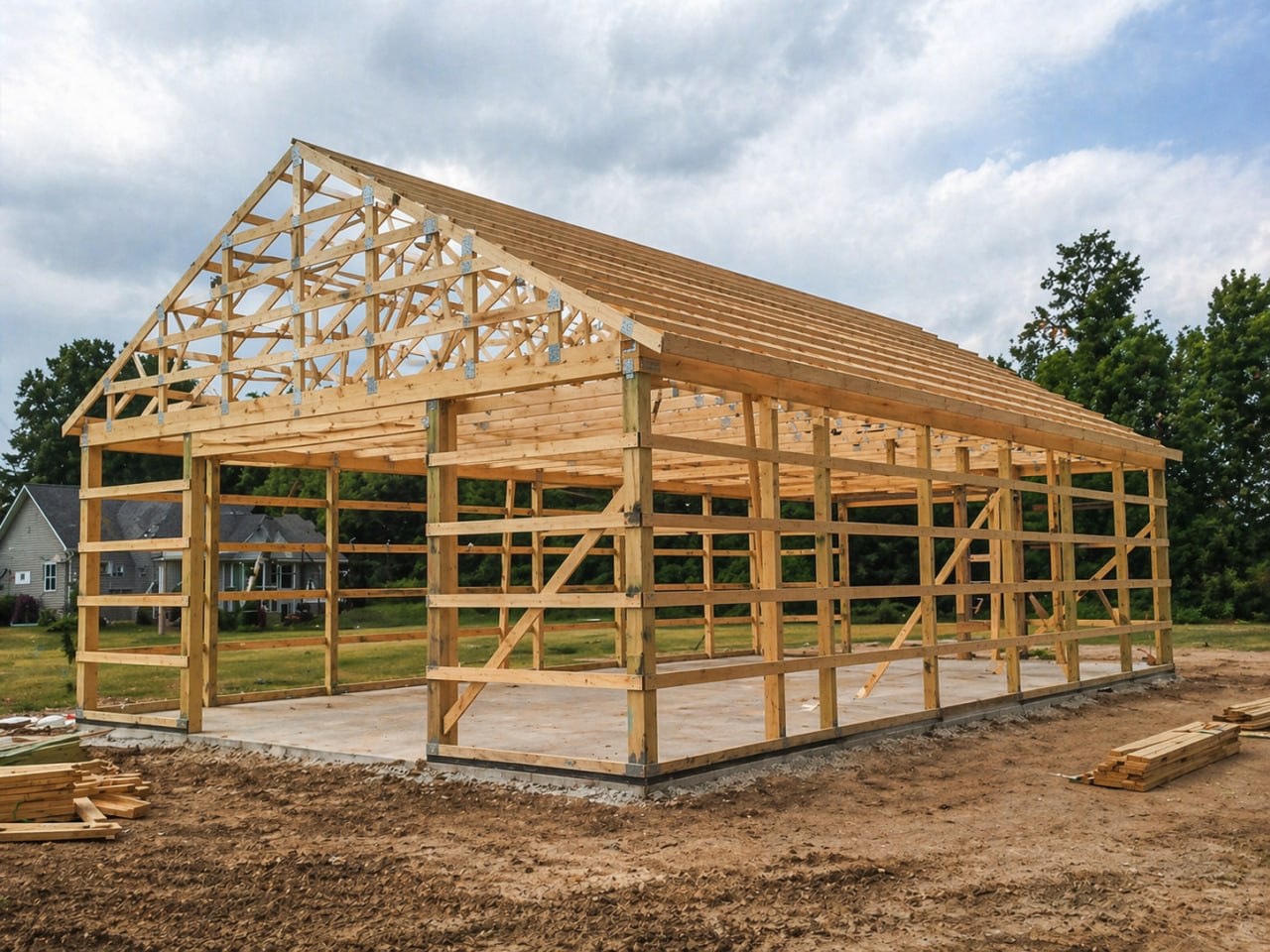
A 30x40 post-frame garage is one of the most popular sizes for buyers who want more than basic storage.
At 1,200 square feet, it is large enough for multiple vehicles, a workshop area, hobby use, tool storage, or a combination of all of the above. That flexibility is exactly why so many property owners start here.
It is also why pricing can vary more than expected.
A simple 30x40 shell and a fully usable 30x40 garage are not the same project, even though the footprint matches.
Quick answer
The cost of a 30x40 post-frame garage depends less on the raw size and more on how you want to use the building.
The biggest pricing swings usually come from:
- Shell-only vs finished use
- Slab specifications
- Number and size of overhead doors
- Wall height
- Insulation
- Electrical and lighting
- Site prep and access
- Region and local structural requirements
Why 30x40 is such a common size
This footprint works well because it gives buyers meaningful space without jumping immediately into a much larger building category.
A 30x40 layout can often support:
- Two to three vehicles depending on layout
- A workshop zone
- Storage shelving
- Mower, ATV, or equipment storage
- Hobby or flex space
That said, the more jobs you expect the building to do, the more important the details become.
The cost drivers buyers should focus on
1. Wall height
A 30x40 garage with modest wall height is one thing. A taller version designed for lifts, larger trucks, RV clearance, or more usable vertical space is another.
Height changes both cost and usability, so this is not the place to guess.
2. Overhead doors and openings
Door choices can swing the budget quickly.
One standard overhead door setup is very different from multiple doors, taller openings, upgraded entry doors, extra windows, or more customized access.
3. Concrete slab requirements
Not every 30x40 garage is used the same way.
A light-duty storage-oriented slab is different from one expected to support heavy vehicles, more demanding shop use, or future upgrades. Buyers should understand exactly what is included in any quote.
4. Insulation and comfort
If the garage is going to be more than a place to park, insulation matters.
Many buyers start by pricing a shell and later realize they want a much more comfortable year-round space. That late upgrade can significantly shift the budget.
5. Electrical and lighting
A truly usable garage usually needs more than a couple of basic lights.
Think through outlets, lighting layout, garage door openers, tool use, future heating or cooling, and whether the building may become more shop-like over time.
6. Exterior and trim upgrades
The more polished and residential-looking you want the building to feel, the more likely you are to upgrade trim, windows, doors, overhangs, and other details.
Shell vs usable garage: a major difference
This is the distinction buyers should understand early.
Shell-oriented build
May include:
- Frame
- Siding
- Roof
- Basic openings
More usable garage build
May also include:
- Slab
- Upgraded overhead doors
- Windows
- Insulation
- Electrical
- Lighting
- Ventilation
- Better finish details
Those are two very different budget conversations.
Common mistakes buyers make with 30x40 garages
Assuming size tells the whole price story
It does not. Use case matters more than many buyers expect.
Underestimating slab and doors
Those two categories alone can change the budget substantially.
Not planning for future use
If you think there is a good chance the building becomes a workshop, hobby space, or year-round garage, budget for that earlier rather than retrofitting later.
Comparing quotes with different finish assumptions
A shell quote is not comparable to a more complete garage quote.
Questions to ask builders
- Is this quote shell only or a more complete garage build?
- What slab assumptions are included?
- What doors and windows are included?
- What wall height is assumed?
- Is insulation included?
- Is electrical included or excluded?
- What site prep is included?
Final takeaway
A 30x40 post-frame garage is a smart size because it can cover a lot of use cases. But that flexibility is exactly why costs vary.
The more clearly you define how the building will be used, the easier it becomes to compare quotes and budget accurately.
Frequently Asked Questions
How many cars fit in a 30x40 post-frame garage?▾
A 30x40 garage (1,200 sq ft) typically fits 2–3 vehicles comfortably with room for a workshop zone, storage, or equipment. Layout matters — a 3-bay configuration with three overhead doors maximizes vehicle access, while a 2-bay setup leaves more space for a shop or hobby area.
What wall height should I choose for a 30x40 garage?▾
It depends on use. Standard garages work fine at 9–10 feet. If you want room for a vehicle lift, taller trucks, or RV clearance, consider 12–14 feet or more. Upgrading height later is expensive, so decide early based on future use, not just current vehicles.
Is the concrete slab included in a 30x40 garage quote?▾
Not always. Some builders include slab and site prep; others quote the structure only and expect you to coordinate concrete separately. Always ask whether slab, reinforcement, and prep are in the number, and what slab spec is assumed for your intended use (light storage vs. shop vs. lifts).
Ready to compare garage builders?
Browse pole barn and post-frame builders by state on Post Frame Network and start comparing companies that handle garages, shops, and multipurpose post-frame projects.